


We want to connect with you! Become a member for free
All funds support our mission. Support Ohio SIBS
Join our team! Opportunities to be involved
What We Do
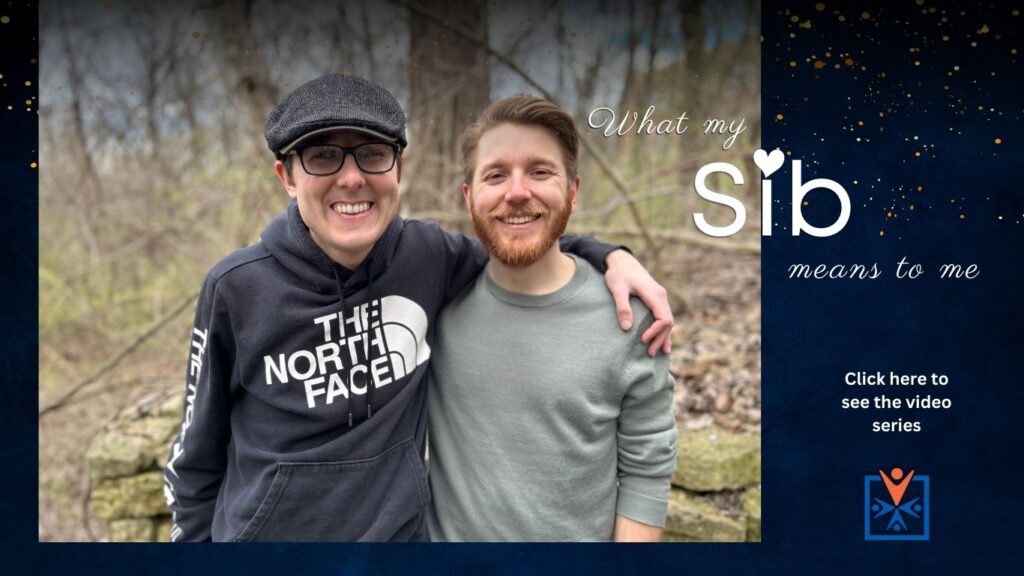
Ohio SIBS is a grassroots organization of siblings of people with disabilities that came together in 2000 to acknowledge the sibling role in the life of a person with a disability. We support siblings throughout their lifespan by connecting them with resources and creating a community of siblings that support the disability community.
Our Mission…
is to empower siblings and advocates to create a better world inclusive of people with disabilities
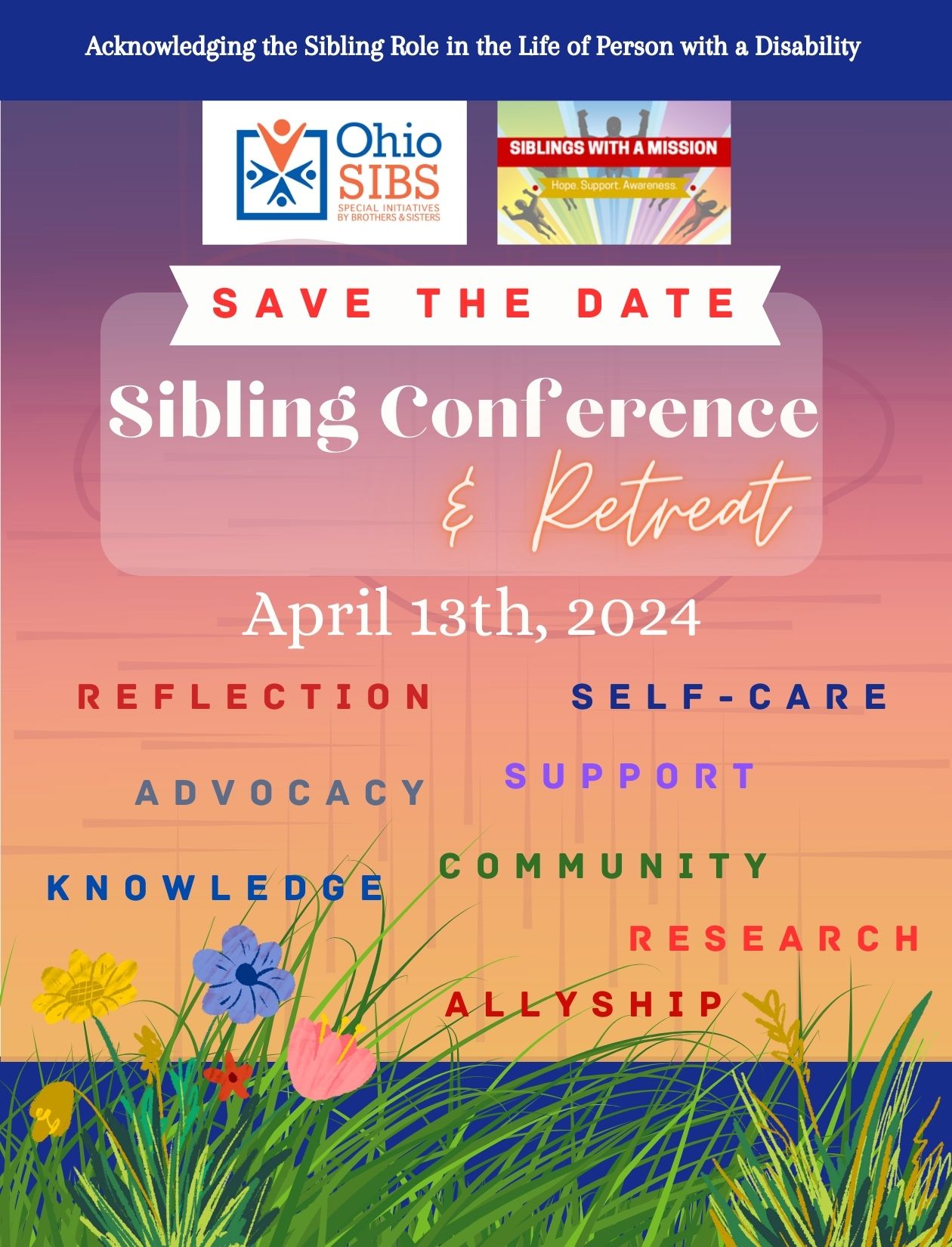
Ohio Sibling Conference 2024
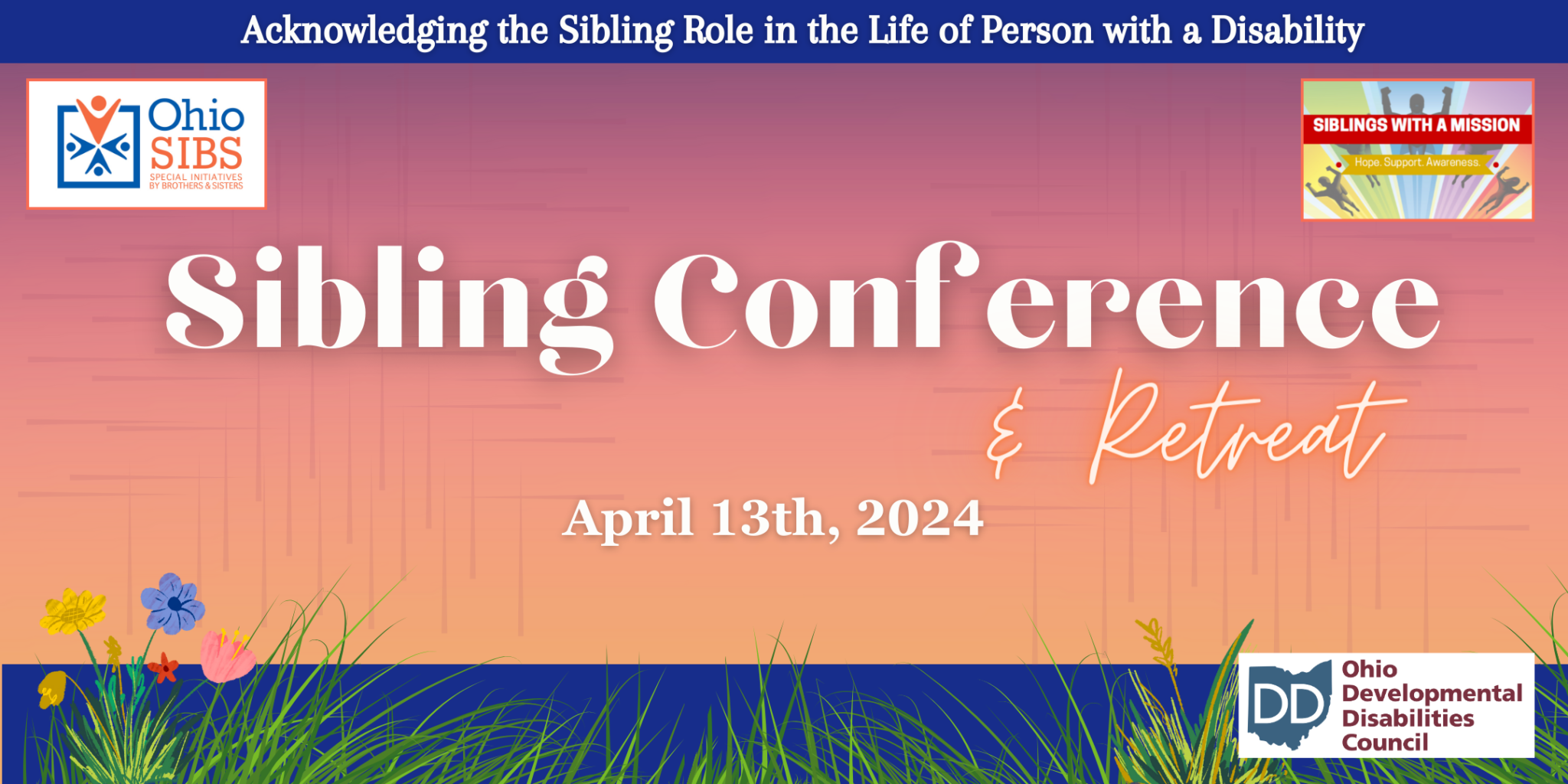
Attendees at the conference will acquire valuable knowledge from Meghan Burke, a keynote speaker, sibling, and researcher from Vanderbilt University. Meghan will address case and cause leadership, guiding attendees in supporting their brothers or sisters and the broader disability community.
We will also feature a sibling panel (with special guests Kari Jones of DASCO and more!) facilitated by Lynne Calloway, an interactive session on Sibling Stories led by Abby Turnwald, breakout sessions with resources to share, and a Self-Care Workshop led by Kara Michelle Pierson, a sibling and founder of Lilac and Indigo.
Date: April 13th, 2024
Location: The WatersEdge Conference & Event Center
4643 Trueman Blvd, Hilliard, OH 43026, USA
Click here for more information.
Virtual SIB Talks
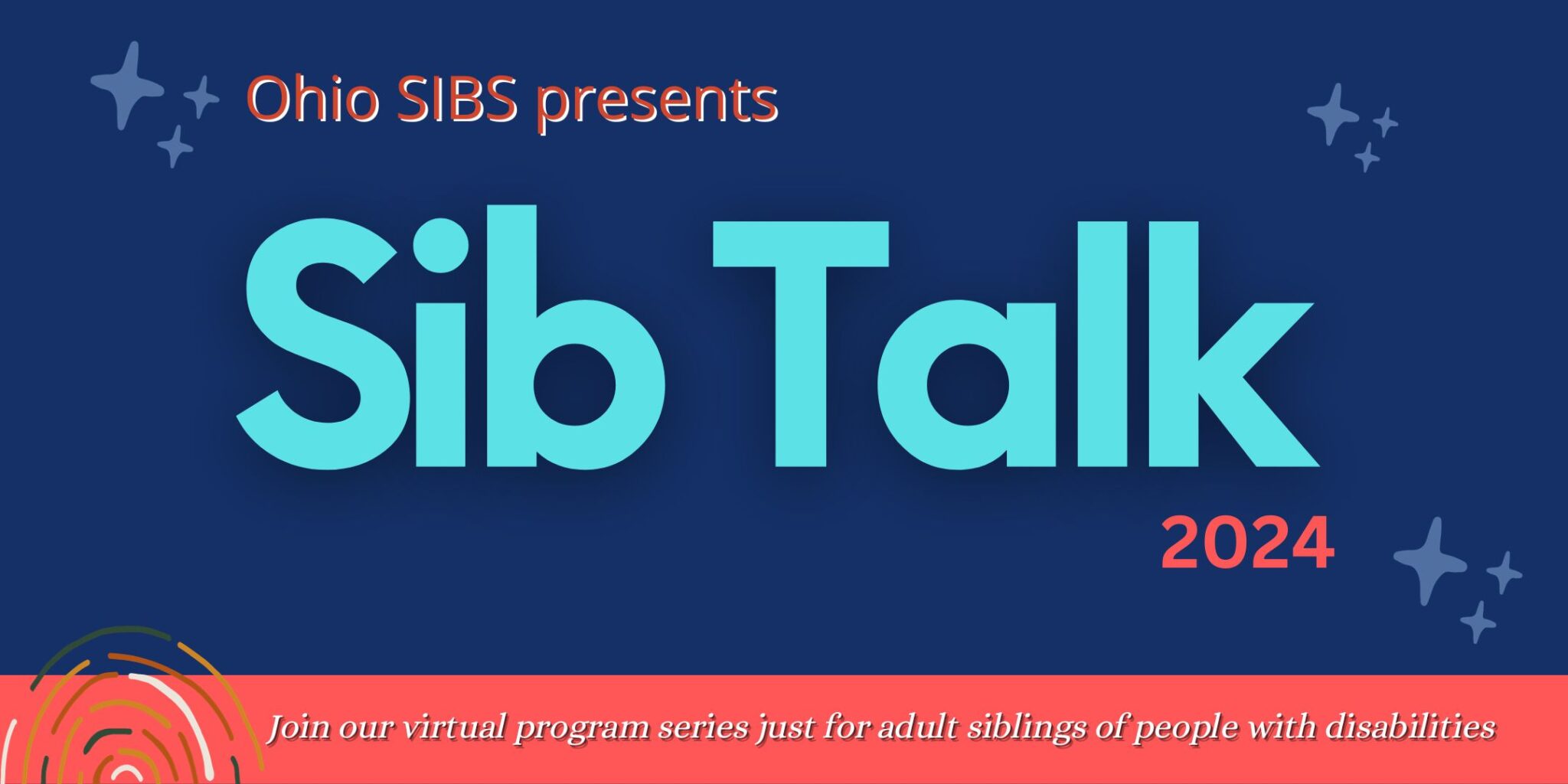
Sib Talk is a virtual information series designed for adult sibs anticipating or living the life of a caregiver for their sibling with a disability. The monthly gatherings are just over an hour and are designed for learning, practical application, networking, and support.
The 2024 series will focus on resilience, building a good life (developmental disability services, community supports), and planning well for the end of one (future planning, financial and estate planning). More than just information we also want to support sibs to integrate what they learn into current and future life plans by using basic Charting the LifeCourse tools.
Register here for SIB Talks
DD Awareness and Advocacy Day
Once a year in March people with disabilities all over Ohio meet at the Statehouse to advocate for current state legislation. To learn more, please visit the Ohio DD Awareness Facebook page.
Our Sibling Support Initiative – SIBSHOPS
Sibshops are peer support and education programs for young siblings of people with developmental disabilities. Learn more about our Sibling Support Initiative for Children and our Partnerships with the county boards. Find a Sibshop in Ohio near YOU! https://ohiosibs.org/siblingresourceschildren/